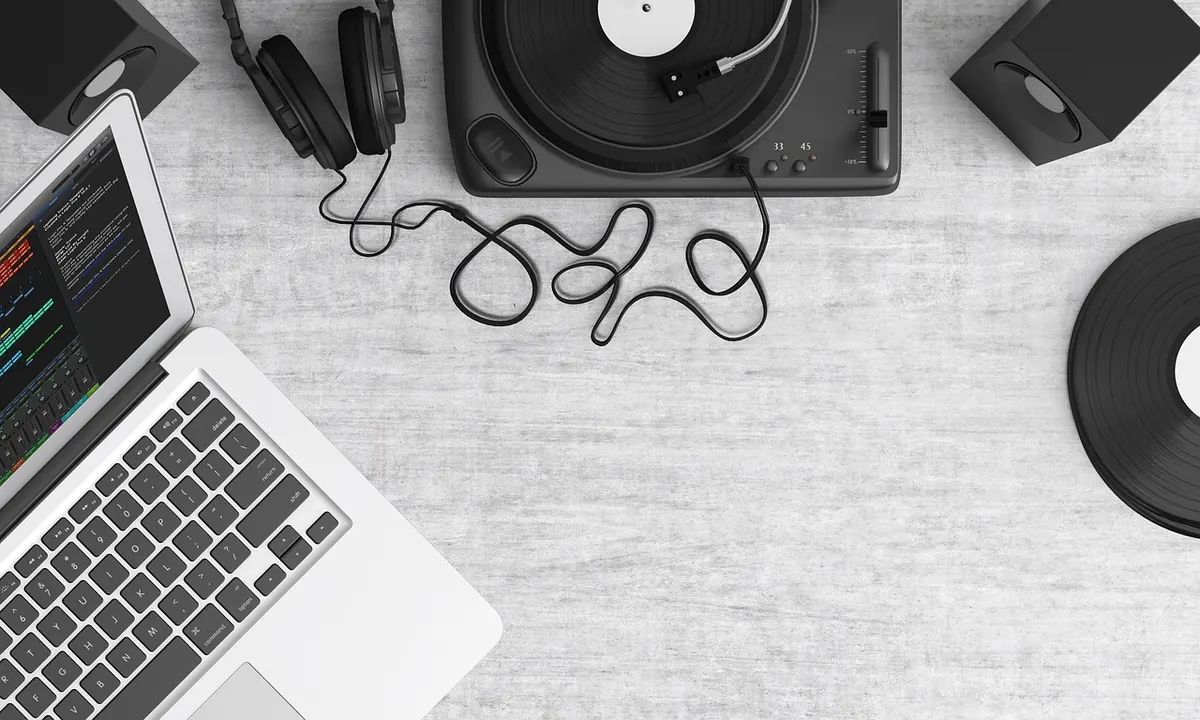
There is a turntable in the corner of the room, a wallet of CDs in the car and a streaming app quietly doing most of the heavy lifting. Most British music fans in 2025 are not choosing between formats — they are running all three at once and paying for the privilege. So the useful question is not which format wins. It is which one deserves your money, your shelf space and your attention.
Why the format debate misses the point
Before comparing anything, accept an awkward truth: the master matters more than the medium. A loud, compressed master will sound flat whether it arrives on a record, a disc or a stream, and no format can rescue it. A carefully recorded, well-mastered album will sound good almost anywhere. Better speakers and a quieter room will improve your listening far more than a change of format ever will.
There is one wrinkle worth knowing. Vinyl usually gets its own master, because the cut has to account for a physical stylus sitting in a groove. Bass is often narrowed towards mono, the loudest passages are reined in, and long albums are spread across more sides. That can make a record sound warmer or more open, but it also means you are often comparing two different versions of an album rather than two formats.
Sound: what you can actually hear
Vinyl
An analogue chain from groove to speaker, with all the character that implies: a faint surface noise floor, the occasional crackle, and roughly twenty minutes a side before you get up again. Set-up matters enormously. A cheap all-in-one deck with a worn, badly aligned stylus will sound thin and can chew up your records. A properly set-up turntable with a decent cartridge, a clean stylus and an anti-static inner sleeve can be genuinely superb — and the fuss is part of the appeal for a lot of people.
CD
Compact disc audio is 16-bit, 44.1 kHz PCM: a silent background, plenty of dynamic range and no wear from playback. With the right software you can rip a bit-perfect copy to a computer or phone and keep the disc as your backup. One underrated advantage is age. Plenty of older pressings were mastered with more headroom than later remasters, so a 1990s CD can sometimes beat the version on sale today. The weak points are scratches and the occasional disc that degrades over decades.
Streaming
Quality depends on the codec, the tier and the connection. Standard tiers are lossy; several major services now offer lossless, and on good equipment it can be genuinely difficult to tell from a CD. The weak link is usually everything around it. Bluetooth codecs compress the audio again, phone outputs vary, and a noisy train carriage undoes the whole argument. If you want streaming at its best, download over Wi-Fi and listen wired.
Cost: the long-term picture
Streaming looks cheapest because it is a small monthly sum rather than a purchase. Over years, though, that sum keeps coming, and you own nothing if you stop paying. Check what the price becomes once any introductory offer ends, and be honest about whether you would actually miss it.
Vinyl has the highest entry cost: the deck, the cartridge, a brush and cleaning fluid, inner sleeves, storage that does not warp anything. Records themselves are rarely cheap new, but they hold value, which means the second-hand market rewards patience. CDs are the bargain of the three. Charity shops, car boot sales and online sellers make owning physical music genuinely affordable, even if resale value is close to zero. Buying a used CD for the price of a coffee and ripping it is still one of the best deals in music.
Portability and everyday use
Vinyl is domestic by design. It does not travel, and it does not shuffle. A CD is the old compromise: fine in a car with a slot loader, fine on a shelf, and easy to turn into files for a phone. Streaming wins outright on convenience — your whole library in your pocket, playlists for the commute, and offline downloads for the places where signal drops out. If you travel by train across the UK, download before you leave the house rather than hoping the connection holds through a cutting in the Midlands.
Environmental impact
No format is clean, and anyone claiming otherwise is selling something. Vinyl is pressed from PVC, weighs a lot to ship and takes energy to manufacture. CDs use polycarbonate and a thin metal layer inside a plastic case. Streaming moves the footprint to data centres and networks; each stream is small, but you stream an enormous amount, and the devices you listen on carry a large share of the burden.
The levers that actually matter are less glamorous than a format switch:
- Buy fewer devices and keep them for longer. A turntable or a phone that lasts a decade beats any comparison of discs and files.
- Buy second-hand first. A used record, CD or speaker adds no new manufacturing demand.
- Avoid buying the same album three times in three formats unless you genuinely use all three.
- Play what you already own before adding to the pile.
Which format suits you?
- You want the ritual, the artwork and the sleeve notes: vinyl, with a properly set-up deck and a cleaning routine you will actually keep to.
- You want to own music outright and cheaply: CDs, ripped to lossless files and stored somewhere safe.
- You want everything, everywhere, immediately: a streaming subscription, ideally on a lossless tier with offline downloads.
- You listen on a decent hi-fi: start with the master and the speakers, then worry about the format.
- You are on a tight budget: a streaming subscription plus a second-hand CD habit covers almost everything.
A practical setup for most UK listeners
You do not have to pick a side. A workable arrangement looks like this:
- Choose one paid streaming service as your base, and use its download feature for travel.
- Rip the CDs you love to lossless files, then back them up in two places. Hard drives fail.
- Buy records only for albums you will play start to finish, and buy them used where you can.
- Keep one good pair of wired headphones or speakers. They will outlast three phones.
- Clean your records, keep your discs out of sunlight, and check your turntable's tracking force once a year.
Get those basics right and the format question largely answers itself. Vinyl for the evenings when you sit down and listen, CDs and files for the music you want to keep, streaming for everything else. That is not a compromise. It is what most people's shelves already look like.
Photo: theglassdesk / Pixabay